
Uni-Shape mouldings are built to last, but a moulding that’s mishandled, fixed to an uneven wall or caught by building movement can crack. The good news is that cracks can be repaired in place. This page explains how to repair cracked mouldings, how to patch holes and surface damage, and how to care for architectural mouldings after installation so they stay clean and protected. The steps apply to standard Uni-Shape mouldings, so confirm the method for your project with your local Unitex technical representative, and always seek Unitex advice for damage after installation.
In This Guide
- Installing solid mouldings
- Allowing for movement joints
- Installing bespoke and void-formed mouldings
- Installing columns
- Repairing and caring for mouldings (You are here)
Download the Uni-Shape usage and installation guide (PDF, issued February 2019)
Why Mouldings Crack, and How to Repair Cracked Mouldings
Cracking usually traces back to a handful of causes. A moulding fixed to an uneven or non-level surface is stressed, and cracking will result. Unnecessary stress on the profiles can also crack them with daily or seasonal thermal expansion and contraction. Building movement, thermal expansion or the facade settling can crack the mastic joints between lengths, which can be re-applied. If a moulding cracks on site before it’s fixed, don’t install it, and contact Unitex to discuss. General cracking that appears after installation is repairable on site.
Patching Damaged Mouldings: Holes and Surface Damage
To patch a hole or surface damage, use a spatula or putty knife to fill the cavity with Unitex Polymer Render, then skim coat with UPC200 Putty. When the cavity is full, rub the surface with a sponge to match the surface texture of the profile, a sandy smooth effect like the mouldings themselves, not glassy smooth. In high humidity or wet conditions, the UPC200 Putty may need an additional 5–10% cement for faster drying, mixed on the putty board. UPC200 Putty isn’t designed for use in movement joints, joints between lengths of mouldings or mitre cuts. Mouldings damaged by on-site abuse after installation can be patched this way, but always seek Unitex advice.
Hairline Crack Repair
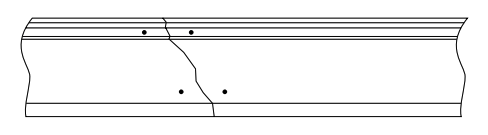
For a hairline crack, cut a V-groove along the crack with a small tool or Stanley knife. Fix anchors approximately 20 mm away from the crack on each side, two per side. Mix UPC200 Putty and apply it to the V-groove, then wait 24 hours for it to dry. Sand it smooth as desired, then apply membrane to match the existing colour.
Moulding Crack Repair for Larger Cracks
A larger crack is repaired in place with the same process, with anchors 20–50 mm from the crack on each side. The number of fixings depends on the size of the moulding, and a moulding wider than 100 mm needs four fixers instead of two. Mix UPC200 Putty or Polymer Render and apply it to the V-groove, wait 24 hours, sand it smooth as desired, and apply membrane or PTC to match the existing colour.
Why Base Board Coating Is Different
The ability to repair in place isn’t shared across the Unitex range. For the Base Board Cavity and Non-Cavity systems, the current technical manuals rule out spot patching. Damaged coating is removed and replaced from stud to stud, with complete re-rendering and re-meshing from the nearest corner to the nearest expansion joint, because a patch doesn’t give an acceptable result. A Uni-Shape moulding can be repaired in place. Base Board coating can’t.
Architectural Mouldings Maintenance
After installation, Uni-Shape mouldings need to be painted in the colour of your choice with Unitex Uni-PTC, which ensures uniform colour integrity and protection. Because moulded profiles project from the wall, in dusty conditions they can collect dirt, dust and grime from the atmosphere. Left in place, that dirt can become a seed-bed for mould growth.
Cleaning architectural mouldings is mostly a matter of hosing down dust and dirt-affected areas twice a year. In these environments, Unitex advises architects and designers to specify mouldings and sills with a minimum 8–10 degree fall, which allows some self-cleaning with rain.
Frequently Asked Questions
Can a cracked moulding be repaired without replacing it?
Yes. Cracks that appear after installation can be repaired in place by cutting a V-groove, fixing anchors on each side, filling with UPC200 Putty, and sanding and coating once dry. If a moulding cracks on site before it’s fixed, don’t install it and contact Unitex.
How long does the repair take to dry?
Wait 24 hours for the UPC200 Putty to dry before sanding it smooth and applying membrane to match the existing colour.
How many anchors do I need to repair a larger crack?
Two anchors per side of the crack, placed 20–50 mm away. A moulding wider than 100 mm needs four fixers instead of two.
How often should mouldings be cleaned?
In dusty environments, hose down dust and dirt-affected areas twice a year, so that dirt doesn’t become a seed-bed for mould growth.
Can UPC200 Putty be used in movement joints?
No. UPC200 Putty isn’t designed for use in movement joints, joints between lengths of mouldings or mitre cuts.
Talk to Unitex About Repairs and Care
For advice on repairing or caring for your mouldings, contact the Unitex technical sales team on 1800 RENDER or sales@unitex.com.au.